What Is My Best Advice?
My BEST ADVICE… That’s what I discuss on this podcast, and what advice I would like you to remember if I don’t get the opportunity to ever share another podcast.
Why Your BODY IS Your BEST TEACHER
If you really want to know how to be healthy, more energy and sleep better. Listen to your body. One of our biggest teachers is our own body, yes your body. It is giving you all the information you need to make wise decisions, yet we very often do not listen to it.
In this podcast Steven Webb the host of Stillness in the Storms talks about his body, his paralysed body and how he needs to listen to it a little more deeply than most would have to.
Why Your BODY IS Your BEST TEACHER
Links to Steven Webb’s podcast and how you can support his work.
- Donate paypal.me/stevenwebb or Coffee stevenwebb.uk
- Steven’s courses, podcasts and links: stevenwebb.uk
Our bodies are talking to us all the time, and in this episode, we dig deep into how to listen to what they’re saying. Pain isn’t just something to push away; it’s actually a teacher, giving us vital info about our well-being. I share my own experiences with body pain and how I’ve learned to understand the signals my body sends me, even when it doesn’t feel like I have control. We’ll explore how ignoring these messages can lead to bigger issues and why tuning in is so important. Let’s take a moment to appreciate our bodies and learn to read the signs they give us!
If you really want to know how to be healthy, more energy and sleep better. Listen to your body. One of our biggest teachers is our own body, yes your body. It is giving you all the information you need to make wise decisions, yet we very often do not listen to it.
In this podcast Steven Webb the host of Stillness in the Storms talks about his body, his paralysed body and how he needs to listen to it a little more deeply than most would have to.
Pain can be more than just a nuisance; it can be a teacher. I want to dive deep into how our bodies communicate with us and how we often ignore these signals. In this podcast, I share my own experiences with pain and how they reflect the messages our bodies are constantly sending. I talk about my paralysis and how it alters my perception of pain. For me, pain isn’t always clear because I don’t feel it in the same way most people do. Instead, I have to rely on other signs from my body to understand what it’s trying to tell me. This journey into understanding my body has taught me that every little discomfort or ache can provide valuable insight into my health and well-being.
Through my stories, I encourage listeners to start tuning into their bodies. I explain how ignoring subtle signs can lead to bigger issues down the road. For example, when I was overweight or eating poorly, my body was sending me hints through fatigue and discomfort. I emphasize the importance of becoming aware of these messages, whether it’s feeling sluggish after a big meal or not being able to focus due to dehydration. Our bodies need us to listen and respond appropriately. By taking the time to understand our physical sensations, we can prevent more significant problems and lead healthier lives.
As we wrap up, I suggest practical ways to start this process of listening to our bodies. Simple practices like taking deep breaths and slowing down can help us become more aware of what our bodies are saying. I invite listeners to engage with their physical sensations, to ask themselves what their pain might be trying to teach them. This approach can lead to a richer understanding of health and well-being, making us more in tune with the most crucial aspect of our lives: our bodies. Let’s learn to respect and listen to our bodies, recognizing that pain serves a purpose and can guide us toward better health.
Takeaways:
- Our bodies are like teachers, using pain to communicate important information to us.
- Listening to our bodies can lead to understanding our discomforts and how to address them.
- When we ignore body signals, we risk worsening our health and wellbeing in the long run.
- Taking a moment to breathe and check in with our bodies can reveal valuable insights.
Today Is No Ordinary Day – 29 Years on
Links to Steven Webb’s podcast and how you can support his work.
- Donate paypal.me/stevenwebb or Coffee stevenwebb.uk
- Steven’s courses, podcasts and links: stevenwebb.uk
Today is no ordinary day, and we dive deep into the reflection of a life-changing moment that happened 29 years ago. We talk about September 1, 1991, the day everything shifted for me. I recount the simple, everyday things I did that day, not knowing it would be the last time I would walk or feel my body in the same way. This episode reminds us to appreciate the small miracles of life we often take for granted. We explore how living with gratitude can transform our perspective, urging everyone to pause and recognize the beauty of each moment.
Every year on the anniversary of when I broke my neck, I reflect on my life being disabled, being paralysed like I am and how it affects me. How I can find the gift in what happened, and how I can use it to help others. This year I reflect on the day of my accident, that morning and what did I do on the last day I could walk.
Reflecting on the significance of September 1, 1991, I take a deep dive into the memories of that day, a day that changed everything for me. I vividly recall waking up, feeling a sense of normalcy that would soon shatter. Each motion I made, from stretching to getting out of bed, seemed routine. I walked to the bathroom, showered, and prepared breakfast, all while my mind wandered, unaware of the impending change. That day felt just like any other Sunday, but it was actually the last day I would walk, the last day I would feel my legs. I chronicle the transition from an ordinary morning to a life-altering moment—the dive that left me paralyzed. This episode isn’t just about my accident; it’s a call to acknowledge how we often take our abilities for granted. I challenge listeners to consider what they might do differently if they knew today was their last day of independence. It’s a poignant reminder to appreciate the small things, those everyday miracles we often overlook.
As I reflect on that fateful dive, I explore how life can change in an instant and how we often live on autopilot, missing the beauty around us. I share thoughts on gratitude and the importance of recognizing the miraculous aspects of our daily lives. I emphasize that every moment is precious and that we should embrace life fully. The memories of that day remind me that love, laughter, and even the mundane can be extraordinary. I urge my listeners to pause, take a breath, and recognize the gifts they possess today. This conversation is an invitation to live intentionally and with gratitude, to wake up every morning and declare, ‘Today is no ordinary day.’
Takeaways:
- Today marks a significant anniversary, recalling the day everything changed for me.
- I often think about September 1, 1991, and how ordinary moments can become extraordinary.
- On that last day I could walk, I didn’t realize how special it really was.
- Living in gratitude for what we have is essential, as nothing is guaranteed tomorrow.
- Every single day holds potential and miracles; we must recognize and appreciate them.
- It’s crucial to live with intention and make memories that last a lifetime.
Today Is No Ordinary Day – 29 Years on
Every year on the anniversary of when I broke my neck, I reflect on my life being disabled, being paralysed like I am and how it affects me. How I can find the gift in what happened, and how I can use it to help others. This year I reflect on the day of my accident, that morning and what did I do on the last day I could walk.
Can you be ANGRY and KIND?
Links to Steven Webb’s podcast and how you can support his work.
- Donate paypal.me/stevenwebb or Coffee stevenwebb.uk
- Steven’s courses, podcasts and links: stevenwebb.uk
How mature is your anger? That’s the big question we’re diving into today. We’ve all got feelings like anger, shame, and guilt, but how grown-up are they really? I’ve been thinking about this a lot, and I believe many of us don’t handle our anger in a mature way. We’ll chat about what mature anger looks like, how it can shift our arguments, and why it’s not just okay to feel angry, but actually important. Plus, we’ll explore how pausing and understanding our emotions can lead to better outcomes in our relationships and daily lives. So, let’s jump right into it!
Is it really possible to be angry and be kind at the same time? I answer this question on today’s podcast, while sharing the story about an argument they could have gone seriously wrong. Have we got anger completely wrong, and should we change the way we see it.
Anger is a natural emotion, but its maturity varies from person to person. In our recent episode, we have a serious conversation about what it means to have mature anger and how it affects our interactions. Anger often signals that something we value is at stake, and understanding this can lead to healthier expressions of our feelings. The discussion revolves around differentiating between immature anger, which can lead to aggressive outbursts, and mature anger that encourages thoughtful dialogue and resolution.
I recount a story of a tense situation with a neighbor about parking, highlighting how my choice to remain calm defused the situation. This moment encapsulates the essence of our talk: when we recognize our anger as a reflection of our values and choose to respond with wisdom, we can navigate conflicts more effectively. The key is to pause and understand what is triggering our anger rather than reacting impulsively.
We also explore how anger can be a force for positive change in the world. Whether it’s addressing social issues or advocating for personal boundaries, anger can motivate us to act. The goal is to harness this energy constructively rather than letting it lead to destructive behaviors. Throughout the episode, we encourage listeners to embrace their anger, understand its roots, and express it in ways that promote connection and understanding rather than division. It’s about using our emotional experiences as tools for growth and better communication.
Takeaways:
- Understanding how mature your anger is can help you respond better in conflicts.
- Mature anger is about pausing, listening, and caring about the other person’s perspective.
- Anger can drive positive change if it’s channeled wisely and not just reacted to.
- We should embrace our anger as it indicates what we deeply care about in life.
- The way we handle our anger can lead to more constructive conversations and solutions.
- Realizing that we choose our reactions to anger can empower us to manage it better.
Can you be ANGRY and KIND?
Is it really possible to be angry and be kind at the same time? I answer this question on today’s podcast, while sharing the story about an argument they could have gone seriously wrong. Have we got anger completely wrong, and should we change the way we see it.
Can Meditation Reduce My Stress and anxiety?
Links to Steven Webb’s podcast and how you can support his work.
- Donate paypal.me/stevenwebb or Coffee stevenwebb.uk
- Steven’s courses, podcasts and links: stevenwebb.uk
Meditation can really help reduce stress, and I want to share how it works. I’ve been open about my struggles with stress and feeling overwhelmed, even if I might seem calm on the outside. The truth is, we all have our battles, and I want to show you how meditation has made a difference for me. Today, I’ll talk about some simple techniques you can use to manage stress and anxiety. By recognizing our feelings and observing our breath, we can change how stress impacts us, even if we can’t change the stressful situations themselves. Let’s dive in and explore this together!
We often hear how meditation is the one thing that will save us from everything. It will improve our health, allow us to live many more years, reduced anxiety, and remove stress. Is it really realistic?
I’m Steven Webb, the host of Stillness in the Storms. And what a lot of people do not know about me is that I get stressed, and I am a long time sufferer of overwhelm. It is time to talk about it, and how I use meditation to help manage my overwhelm and stress.
Meditation is a powerful tool for managing stress, and in this discussion, we dive deep into why it works. I share my personal struggles with overwhelm and stress, revealing that despite my calm exterior, I often feel the weight of anxiety. It’s easy to think that meditation is just for the zen-like individuals, but I’m here to tell you that it’s for everyone, especially those who feel overwhelmed by life’s demands. When we practice meditation, we learn to sit with our thoughts and feelings, recognizing them without judgment. This awareness helps us manage our reactions to stressors. Instead of letting stress build up, we can pause and reflect on our feelings, which can prevent us from spiraling into anxiety. I’ll also walk you through some simple techniques that can help anyone incorporate meditation into their daily routine, making it a valuable tool for navigating life’s ups and downs.
Takeaways:
- Meditation can help reduce stress and anxiety by increasing self-awareness and understanding of feelings.
- Stress and anxiety are common experiences for many people, but acknowledging them is the first step to coping.
- Meditation allows us to observe our thoughts and feelings without judgment, helping us manage stress better.
- Recognizing the signs of stress can prevent overwhelming feelings and help in making better choices.
- Meditation is not about eliminating stress, but about changing how we respond to it in our lives.
- Engaging in meditation regularly can improve our ability to handle stressful situations in a healthier way.
Can Meditation Reduce My Stress and anxiety?
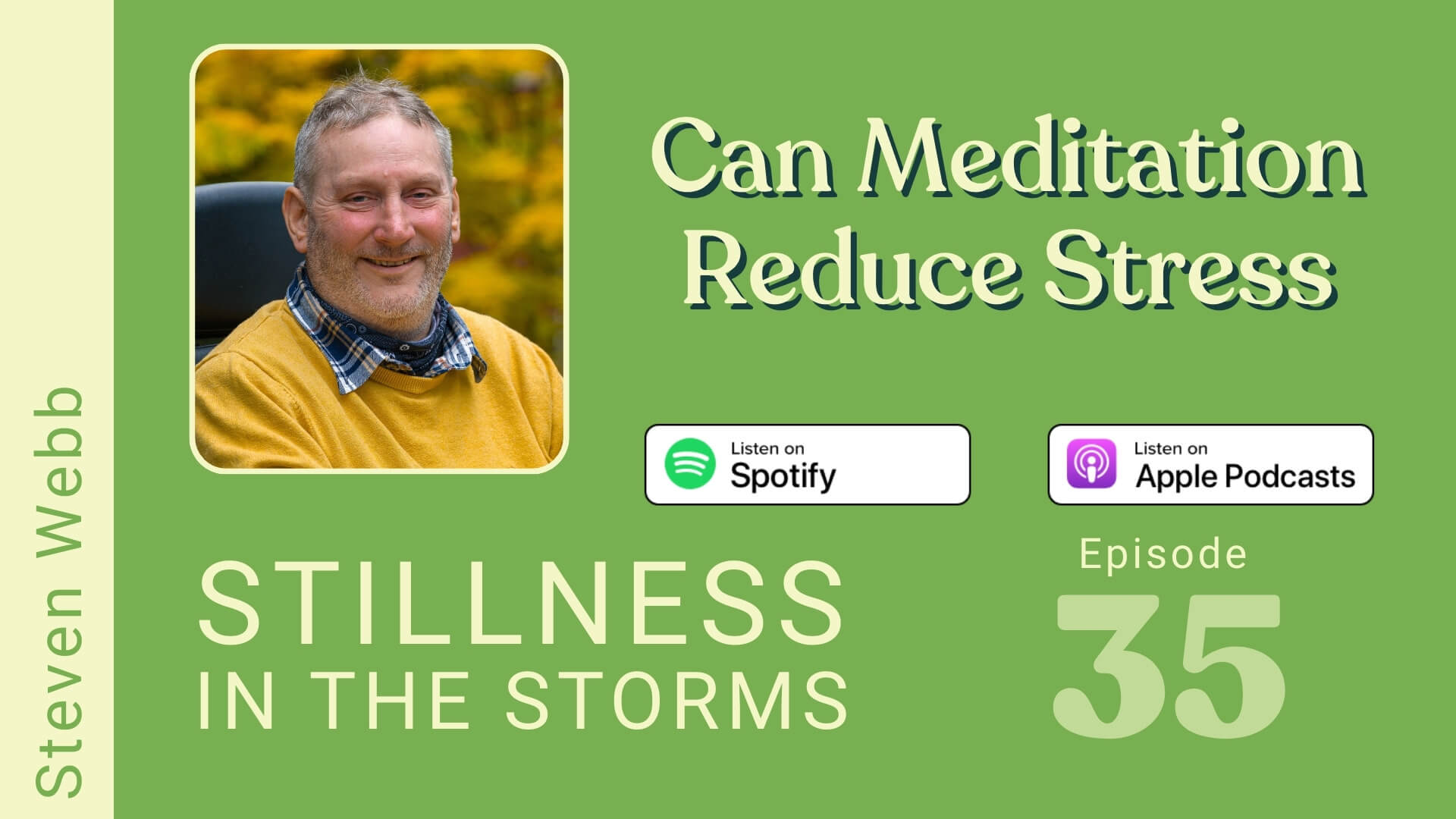
We often hear how meditation is the one thing that will save us from everything. It will improve our health, allow us to live many more years, reduced anxiety, and remove stress. Is it really realistic?
I’m Steven Webb, the host of Stillness in the Storms. And what a lot of people do not know about me is that I get stressed, and I am a long time sufferer of overwhelm. It is time to talk about it, and how I use meditation to help manage my overwhelm and stress.
The Middle Way | Life with less Suffering
Links to Steven Webb’s podcast and how you can support his work.
- Donate paypal.me/stevenwebb or Coffee stevenwebb.uk
- Steven’s courses, podcasts and links: stevenwebb.uk
Today, I want to dive into the idea of balance and the middle way. I’ve had a super long day filled with meetings, but instead of feeling drained, I’m reflecting on how I can find satisfaction in my daily life, even when things get tough. It’s really about staying present, no matter how chaotic things might seem. We all have moments that feel overwhelming, but just because one part of the day is challenging doesn’t mean the whole day is a loss. Let’s explore how we can approach each moment with calmness, breathe through the stress, and appreciate the journey, even when it gets rocky.
Very often you hear in Buddhism about the middle way, but what does it really mean to live the middle way. This podcast is a general chat at the end of a long day, and how I remain positive and optimistic without going into my own suffering.
Balance is key in life, especially after a long day filled with meetings and responsibilities. Stephen Webb shares his personal journey as a city councillor and mindfulness coach, illustrating how even when life feels overwhelming, finding the middle ground can lead to satisfaction. He stresses that it’s not about avoiding challenges, but about facing them with a calm heart and a present mindset. By acknowledging both the highs and lows, we can cultivate a sense of peace even in chaos. It’s about managing our expectations and recognizing that tough moments don’t define our entire day. We can still find joy in the little victories, like engaging in meaningful discussions about improving our community, despite the fatigue. Each moment offers a chance for mindfulness, inviting us to breathe and embrace the present, no matter how challenging it may be.
Takeaways:
- Balance is key in life, even amidst the chaos of meetings and responsibilities.
- Our daily experiences don’t have to define our overall mood or satisfaction.
- It’s important to practice mindfulness during challenging moments, not just in peaceful ones.
- Finding calm in stressful situations takes practice, but it’s essential for well-being.
- Recognizing both pleasant and unpleasant moments is vital for true balance in life.
- Going to bed satisfied with the day shows that even tough days can have value.