Forgiveness Begins When the Heart Breaks Open
Links to Steven Webb’s podcast and how you can support his work.
- Donate paypal.me/stevenwebb or Coffee stevenwebb.uk
- Steven’s courses, podcasts and links: stevenwebb.uk
🎙 Episode Title: Forgiveness Begins When the Heart Breaks Open
Forgiveness Meditation: Forgiveness for Your Freedom
🧘 Host: Steven Webb | Stillness in the Storms
🎧 Episode Summary:
In this honest and raw episode, I talk about my own journey through heartbreak, betrayal and real forgiveness. Not the kind where you say the right words to move on. The kind that comes slowly. Quietly. The kind that has nothing to do with the other person.
I share the story of being cheated on. The numbness. The anger. The questions I never asked. And the moment, years later, when a single text made me realise I had already forgiven her.
This is not about forgetting. It is not about being okay with what happened. It is about breaking the grip that the past has on your heart. It is about grieving the life you thought you were going to live. It is about reclaiming your peace.
If someone has hurt you or left you, or if you are stuck in a story that replays over and over, this episode is for you.
🛠 In This Episode:
- Why “forgive and forget” is a myth
- How I navigated betrayal while living with paralysis
- The day I realised I had truly forgiven
- Why we grieve the imagined life more than the person
- How to let go when there are no answers
- A simple practice to begin your own path to forgiveness
🧘 Forgiveness Practice and Affirmations:
Find a quiet space. Sit comfortably. Bring to mind the person or situation that caused the pain. Let it sit without story. Just feel what is there. Then say inwardly:
- I remember the harm that was done.
- I may not be ready to forgive, but I am willing to try.
- May I find peace in my heart.
- May I be free from the pain that caused you to hurt me.
- I release myself from the burden of this hurt.
You do not have to rush. You do not have to think about it every day. Just let the practice do its work. And when the mind brings it up again, simply say, I forgave them. Let it pass. And over time, the weight softens.
💬 Listener Support:
If this episode speaks to you, share it with someone who needs it. And if you can, help keep the podcast going by visiting stevenwebb.uk
Afternoon Stillness for a Busy Mind
Links to Steven Webb’s podcast and how you can support his work.
- Donate paypal.me/stevenwebb
- Steven’s courses, podcasts and links: stevenwebb.uk
Afternoon Stillness for a Busy Mind
Sometimes the hardest part of the day is the middle. You’ve done a lot, but there’s still more ahead. Your mind races, your focus scatters, and your body feels tight or heavy. This five-minute guided meditation offers a simple pause to help you reconnect with calm, reset your attention, and soften the noise.
This practice is ideal for anyone who feels overwhelmed, distracted, or mentally exhausted during the afternoon. It’s especially supportive for those juggling work, caregiving, chronic health issues, or emotional burnout. Whether you’re sitting at your desk, taking a quiet moment in the car, or finding a few minutes alone between tasks — this meditation is a soft anchor to bring you back.
You’ll be guided through gentle breath awareness and subtle body connection to help ease tension and slow the pace of your thoughts. There’s no pressure to do it perfectly — just space to be, breathe, and return to your centre.
This track can help with:
- Afternoon overwhelm or brain fog
- Emotional stress or anxious thoughts
- Reconnecting with presence and clarity
- Creating a mindful break in your routine
- Cultivating inner peace in the middle of busy days
Give yourself this small gift of stillness. You deserve it.
Overthinking Is Not Your Fault (But Here's How to Stop)
Links to Steven Webb’s podcast and how you can support his work.
- Donate paypal.me/stevenwebb or Coffee stevenwebb.uk
- Steven’s courses, podcasts and links: stevenwebb.uk
Meditation that goes with this podcast: A Dharma Meditation Beyond Overthinking
Overthinking Is Not Your Fault (But Here’s How to Stop)
In this episode of ‘Stillness in the Storms’, host Steven Webb explores the concept that we are not our thoughts. He discusses how thoughts arise from the subconscious mind and how we can learn to observe them without attachment. Through personal anecdotes and insights into meditation, he emphasizes the importance of awareness in managing overthinking and anxiety. The episode encourages listeners to become observers of their thoughts and to choose which thoughts to engage with, ultimately leading to a more peaceful and mindful existence.
Takeaways
- You are not your thoughts; you have thoughts, but they do not define you.
- The subconscious mind generates thoughts that can be observed without attachment.
- Meditation helps in recognizing the distinction between thoughts and awareness.
- Negative thoughts are a natural part of human experience and survival.
- Choosing which thoughts to engage with can change your mental trajectory.
- Awareness of thoughts allows for greater control over emotional responses.
- Thoughts often originate from external influences, not just personal experiences.
- You can smile at your thoughts and not take them seriously.
- The journey to awareness often involves exploring different spiritual practices.
- Your subconscious mind is designed to support you and bring forth thoughts that align with your desires.
A Dharma Meditation Beyond Overthinking
Links to Steven Webb’s podcast and how you can support his work.
- Donate paypal.me/stevenwebb
- Steven’s courses, podcasts and links: stevenwebb.uk
A Dharma Meditation Beyond Overthinking
This guided meditation gently blends spoken reflection with quiet awareness, offering a way to move beyond the restless swirl of thoughts without trying to stop them. You will be invited to notice the momentum of thinking, like a flywheel or a passing train, and then return attention to the simplicity of the body and the present moment.
Rather than fixing or fighting the mind, this Dharma talk meditation brings a sense of ease and acceptance. With soft encouragement, lovingkindness, and a gentle re-entry, it helps you remember that peace is not something you chase. It is something you return to by stepping out of thought and into now.
The Truth About Anxiety & Imposter Syndrome
Links to Steven Webb’s podcast and how you can support his work.
- Donate paypal.me/stevenwebb or Coffee stevenwebb.uk
- Steven’s courses, podcasts and links: stevenwebb.uk
Episode 147: The Truth About Anxiety & Imposter Syndrome
Welcome to Stillness in the Storms with your host, Steven Webb. In this deeply personal and insightful episode, Steven tackles two of the most common yet misunderstood challenges: anxiety and imposter syndrome.
He argues that these feelings themselves are not the problem. The real issue? Our belief that we shouldn’t be experiencing them. Steven shares his own vulnerable journey, from council meetings feeling unqualified, to navigating high-pressure Q&A panels, and the everyday internal dialogues that come with stepping up.
Key Themes & Takeaways:
- Reframing the “Problem”: Anxiety and imposter syndrome are natural human experiences, not flaws to be eradicated. The real struggle comes from resisting them.
- The Power of Listening (Not Obeying): Our minds are full of voices – some fearful, some critical, some brave. The skill is in acknowledging them all, like a chairperson listening to a committee, without letting any single voice dictate your actions.
- Authenticity in Vulnerability: Sharing your doubts and fears doesn’t make you weak; it makes you relatable and authentic. Steven would rather be in a room with people who acknowledge their imposter syndrome than those who deny it.
- Showing Up Anyway: True courage isn’t the absence of fear, but acting despite it. Your unique 1% of knowledge or perspective might be exactly what someone else needs to hear.
- Personal Anecdotes of Resilience:
- Feeling like an outsider in professional council meetings.
- The “climate change conference” Q&A panel where a simple, honest answer resonated most.
- Being a charity trustee (Community Energy Plus) and doubting his contribution.
- The internal battle when asked to apply for a vice-chair role.
- The physical manifestations of anxiety before important events.
- It Doesn’t Go Away, It Becomes Part of the Dialogue: These feelings may not disappear, but our relationship with them can change. They can become familiar (if sometimes annoying) companions rather than paralyzing enemies.
Food for Thought:
- What if your anxiety and imposter syndrome are simply signals, not stop signs?
- How can you “chair” the committee of voices in your own head more effectively?
- Remember: “Confidence isn’t the absence of self-doubt; it’s showing up anyway.”
Support Stillness in the Storms:
This podcast is ad-free thanks to listeners like you! If you find value in these conversations, please consider supporting the show with a donation (like buying Steven a coffee!).
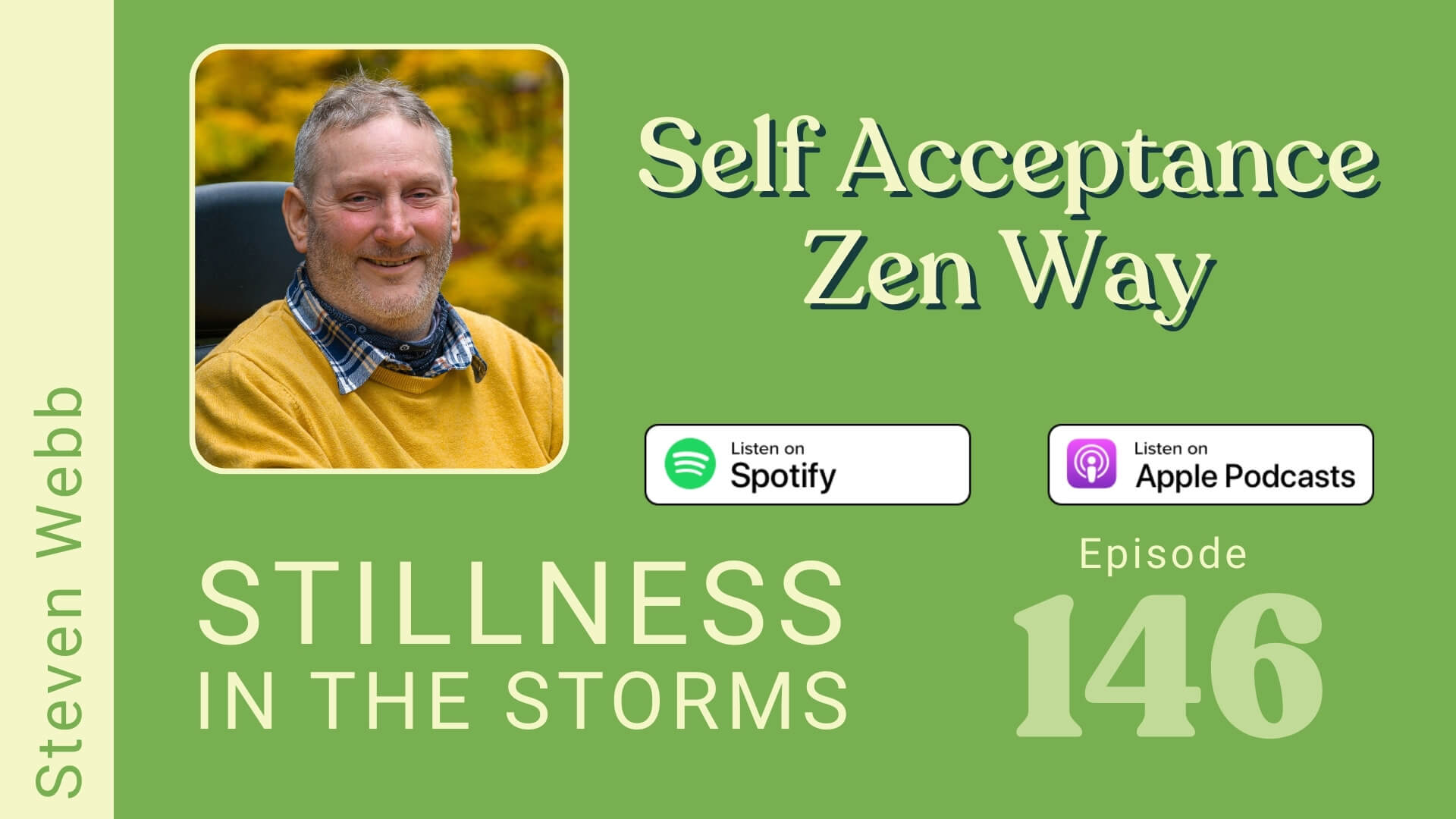
Self Acceptance – The Zen Way
Links to Steven Webb’s podcast and how you can support his work.
- Donate paypal.me/stevenwebb or Coffee stevenwebb.uk
- Steven’s courses, podcasts and links: stevenwebb.uk
Self-acceptance is key, and today we dive into how Zen teaches us to stop needing to fix our lives. We explore what Zen really means and how we can apply it to our daily routines without it just being some trendy catchphrase. Through this episode, we challenge the idea that our lives are broken and discuss the importance of embracing the present moment as it is. I share personal stories and insights on how Zen can help us find peace amidst chaos. So, let’s sit back, relax, and learn how to just be in our moments without the urge to change everything around us.
Self acceptance is a journey we all navigate, and in this episode, Steven Webb dives deep into the concept of Zen and how it relates to our everyday lives. He shares a powerful quote: “Zen doesn’t fix your life; it stops you needing to.” This sets the stage for a conversation about what Zen truly means. It’s not just a trendy phrase or a meme we see online; it’s about embracing the present moment and realizing that life is not broken, but rather, we often feel the urge to fix things that don’t need fixing. Steven invites listeners to explore how to incorporate Zen into their lives, focusing on being present and accepting ourselves as we are. He emphasizes that life is full of challenges, but rather than trying to change everything, we can learn to sit with our experiences and recognize that suffering is part of being human. By adopting a Zen mindset, we can find peace in the chaos and appreciate the beauty of the moment without the constant need for improvement.
Takeaways:
- Zen doesn’t fix your life but helps you stop needing to fix it.
- Being present in the moment allows you to accept life as it is right now.
- The desire to always fix things can lead to never-ending dissatisfaction in life.
- Happiness is not an achievement but an experience that happens in the mundane.
Self Acceptance, the Zen Way
Links to Steven Webb’s podcast and how you can support his work.
- Donate paypal.me/stevenwebb
- Steven’s courses, podcasts and links: stevenwebb.uk
Embrace self-acceptance through the gentle wisdom of Zen. This guided meditation helps you release the constant need to “fix” yourself and discover the profound peace of acknowledging your inherent worth. Learn to simply be, and find wholeness in the present moment, the Zen way.
Expanding Your Circle of Love
Links to Steven Webb’s podcast and how you can support his work.
- Donate paypal.me/stevenwebb
- Steven’s courses, podcasts and links: stevenwebb.uk
Expanding Circle of Love – Guided Meditation
This episode offers a gentle, imagery‑rich meditation designed to help you widen the circle of people (and beings) you hold with warmth and goodwill. Inspired by a discussion on the Stillness in the Storms podcast (“Circle of Love & Circle of Care”), this practice turns concept into lived experience. The practice was inspired by our earlier talk‑episode “Circle of Love & Circle of Care,” where we explored the idea that compassion can be trained like a muscle. Today we move from theory to felt experience – settling the mind, then letting love ripple outward.
Why Listen?
- Deepen empathy & soften judgment – practice seeing more of humanity as “in your circle.”
- Soothe anxiety & self‑criticism – loving‑kindness lights up the brain’s calming networks.
- Strengthen emotional resilience – caring connection is a proven buffer against stress.
- Create positive ripple‑effects – the kinder you feel inside, the kinder you act outside.
What to Expect
- Context & gentle settling – a short reminder of the circle‑of‑care principle.
- Guided practice – Expanding Circle of Love (no background ads, just my voice and subtle music).
- Grounding close – simple ways to carry the feeling forward into your day.
Completely Ad‑Free
Every meditation in this feed stays serene and uninterrupted thanks to listeners who keep the lights on by treating me to a coffee. Your generosity lets these practices remain free for everyone. ☕💙
How Big Is Your Circle? Let's Talk Love and Acceptance
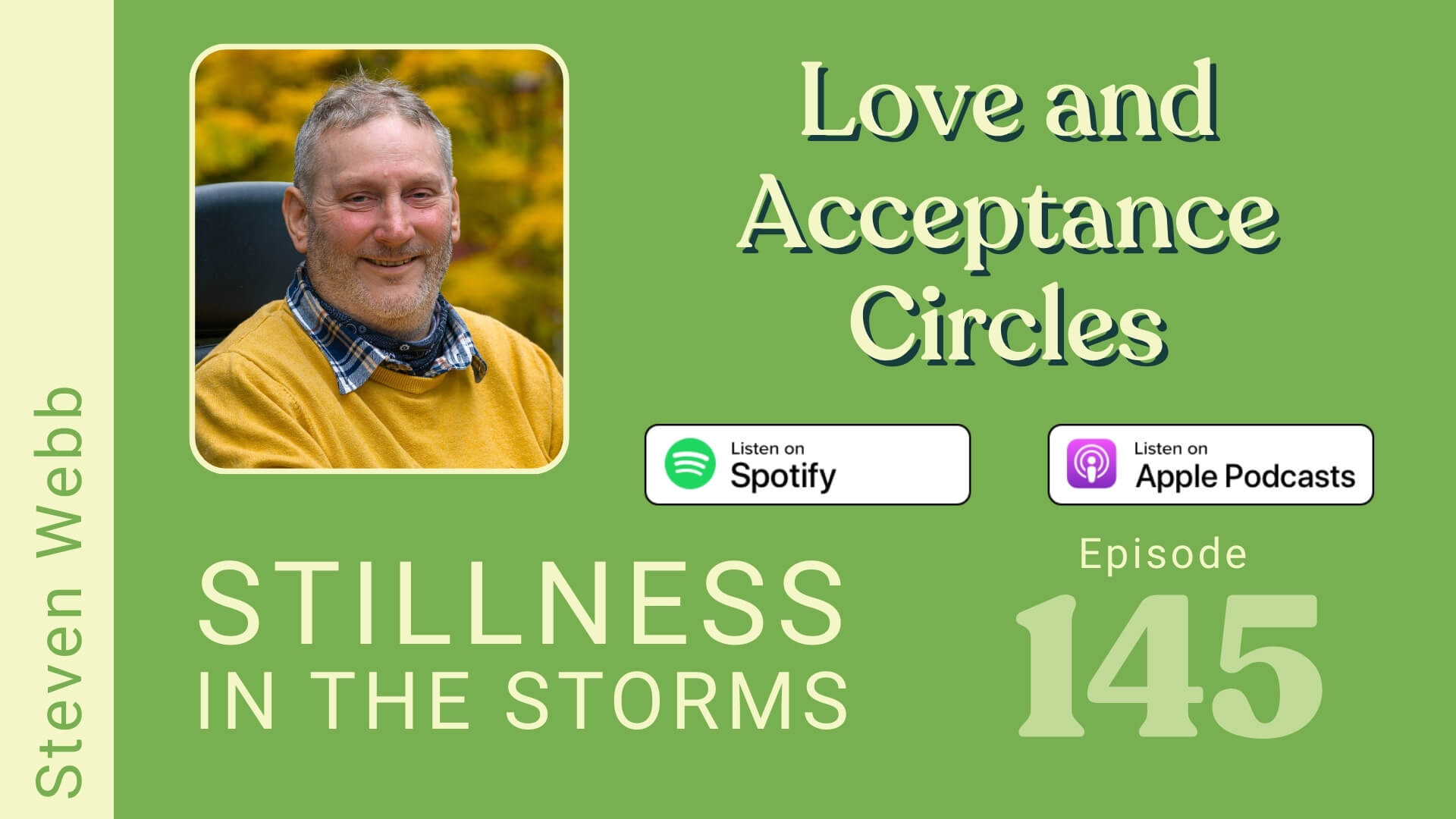
We’re diving into the idea of our circles of acceptance today. How big is your circle of love and understanding? I’ve been thinking about how our perspectives change as we grow up, from a tiny circle in childhood to something much larger as adults. It’s fascinating to look at how our circles can expand or contract based on our experiences and feelings. I’ll be sharing some insights on this journey and how it affects our relationships with ourselves and others. Plus, I’ve got a guided meditation coming up that’ll help us explore these circles even more. Let’s get into it!
Links to Steven Webb’s podcast and how you can support his work.
- Donate paypal.me/stevenwebb or Coffee stevenwebb.uk
- Steven’s courses, podcasts and links: stevenwebb.uk
🎙️ Stillness in the Storms — Episode: “How Big Is Your Circle of Love?”
A heartfelt reflection on how wide your love really reaches — and how to gently grow it.
🧭 What This Episode Covers
- How big your circle of love, care, and acceptance really is
- Why it naturally shrinks during stress and expands with growth
- The six stages of ego development and how they relate to your caring
- How to reflect without judgment on who is inside — or outside — your circle
- Zen and Buddhist perspectives on expanding compassion
🌀 Circle Stages — Simple Breakdown
- Pre-Egocentric – Me as impulse (pure survival)
- Egocentric – Me as person (all about me)
- Ethnocentric – My tribe (loyalty, shared identity)
- Worldcentric – All humans (equal value, global empathy)
- Planetcentric – All beings (animals, ecosystems, future life)
- Kosmocentric – No separation (universal awareness, nondual)
We move in and out of these stages — even in a single day. The goal isn’t perfection, it’s awareness.
🧠 Quotes That Land
“Growth is always in the direction of greater wholeness and inclusion.” – Ken Wilber
“Love is a state of being.” – Eckhart Tolle
“If we do not transform our pain, we will most assuredly transmit it.” – Richard Rohr
“Forgive them, for they know not what they do.” – Jesus (Luke 23:34)
Takeaways:
- In this episode, we explore the different stages of our circle of acceptance and love.
- Understanding how to recognize and expand our circle can lead to greater empathy and compassion.
- The podcast emphasizes the idea that our circles of caring are not fixed and can change over time.
- We discuss how personal experiences, such as stress or busyness, can contract our circles of acceptance.
- The conversation highlights the importance of caring for not just loved ones, but also for people across the globe.
- We delve into deeper concepts of world centric and planet centric thinking for a broader perspective.
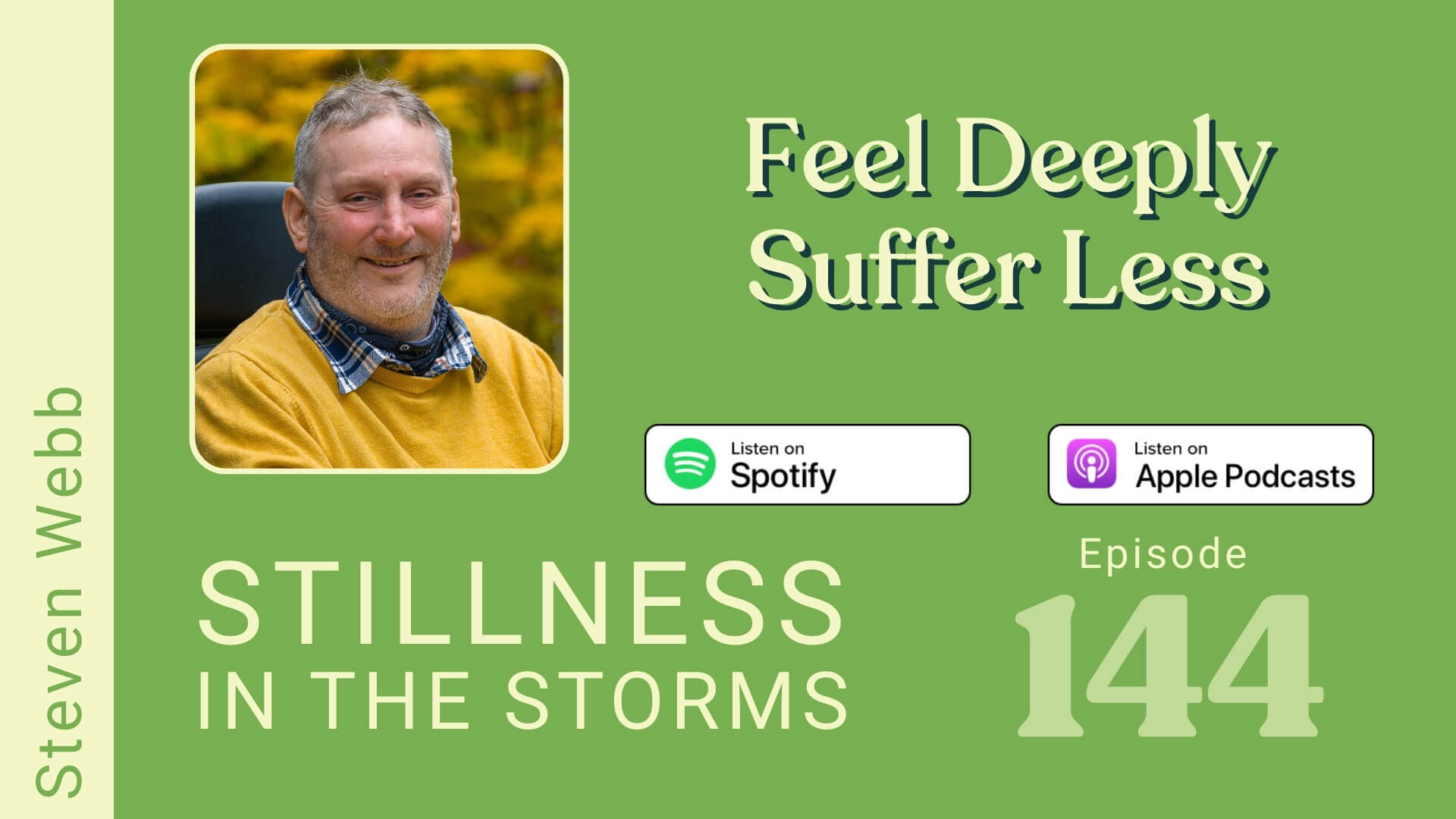
Feel Deeply, Suffer Less: The Unexpected Power of Emotion
Links to Steven Webb’s podcast and how you can support his work.
- Donate paypal.me/stevenwebb or Coffee stevenwebb.uk
- Steven’s courses, podcasts and links: stevenwebb.uk
🧘 Host:
Steven Webb – Meditation Teacher & Former Mayor of Truro
🌀 About This Episode:
What if the key to less suffering wasn’t found in avoiding pain—but in feeling it all? In this powerful episode of Stillness in the Storms, Steven Webb explores why allowing yourself to feel deeply might be the most healing, human thing you can do.
We’re often told to “stay positive” and “chin up,” but what if the real strength lies in making room for grief, sadness, loneliness, and joy alike? Steven shares personal reflections, Zen wisdom, and practical insight into how embracing every emotion can make you more whole—and more at peace.
Whether you’re feeling stuck in your sadness, disconnected from joy, or overwhelmed by the ups and downs of life, this episode is an invitation to stop running and start listening… to yourself.
🎧 What You’ll Learn:
- Why people who feel deeply often suffer less, not more
- The real meaning of emotional wholeness
- How to stop identifying with your emotions
- The ego vs. the “big mind”—and why balance matters
- A simple shift in language that changes how you relate to feelings
✨ Takeaway:
You don’t need to fix every emotion. You just need to feel it, then let it pass. That’s where peace begins.
💛 Support the Podcast:
If this episode moved you, consider buying Steven a coffee at stevenwebb.uk. No adverts, just real conversations—thanks to listeners like you.