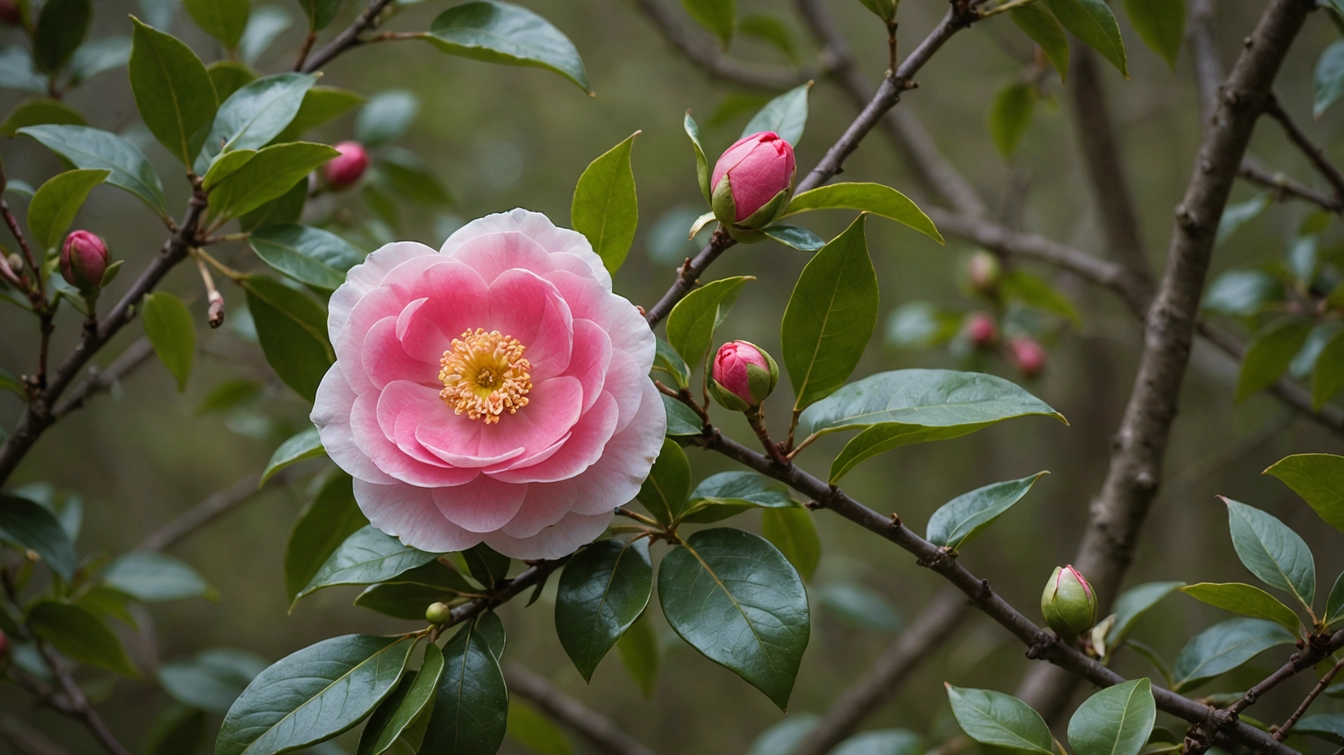
There is a camellia bush on the way down the hill that I had thought had given up completely.
There is a camellia bush on the way down the hill that I thought had given up completely.
All through winter it just sat there. Brown leaves. No colour. Nothing happening at all. I looked at it most mornings from the window and thought, well, that is that. It had a good run. Time to accept it is done.
Then on the way back from a council meeting I noticed just one single bud.
One single bud. Tight and quiet and not making any fuss about it. Just there. Like it had been planning this the whole time and was waiting for me to stop watching.
I did not do anything to make that happen. I did not give the bush a motivational speech. I did not draw up a recovery plan or set it a deadline. It just rose. Because that is what life does when the conditions shift and nobody is standing in its way.
I have been thinking about this a lot, especially now. It is Easter weekend. Spring is doing its thing. And I recently came home from a hospital stay that left me feeling, honestly, a bit like that camellia bush. Stripped back. Still. Not sure what was left.
I want to be careful here because I do not want this to become a story about bouncing back or being resilient or any of those words that sound inspiring but often just make people feel worse when they are not bouncing anywhere. That is not what this is about.
This is about what happens when you stop trying to make things rise. And they rise anyway.
The rhythm underneath
Have you noticed that about spring? Nobody organises it. Nobody sends out a memo. The daffodils do not check the calendar. They just show up along the roadside, in the same spots they always do, and every year I am somehow surprised by them. Where did you come from? You were not here last week.
But of course they were. They were always there. Underground. Resting. Doing whatever it is that bulbs do in the dark.
I think we are like that more than we realise.
There are seasons in a life where things go underground. Your energy. Your curiosity. That feeling of being genuinely interested in anything at all. Sometimes your hope goes quiet too, and the world flattens out, and everything feels like wallpaper.
And the temptation, when you notice it happening, is to panic. To force something. To set an alarm for joy. To Google “how to feel alive again” at two in the morning. I have done all of these things, by the way. None of them worked.
What worked, eventually, was stopping. Not giving up. Stopping. There is a difference. Giving up says nothing will come. Stopping says something might, but I am not going to stand over it with a stopwatch.
Alan Watts used to talk about this. He saw the rhythm everywhere, in waves, in seasons, in the breath itself. A wave rises, crests, falls. And if you are watching just one wave, you might think that is it. Gone. Finished.
But another comes. And another. The ocean does not run out of waves.
His point, the one I keep coming back to year after year, is that we are not watching that rhythm from the outside. We are that rhythm. The rising and falling of energy, of mood, of hope, of creativity. That is not a problem to be fixed. It is the shape of being alive.
The trouble comes when we get attached to the crest. When we decide the high point is the real us and the low point is the broken us. When we grip the good feeling and panic when it fades.
But fading is not the same as dying. It is just the other half of the wave.
What Easter is really about
I think Easter means something along these lines, whatever your relationship with the story. Strip away the theology and what you have left is an image that almost everyone recognises: something that was buried, something that seemed finished, coming back. Not perfectly. Not on schedule. But coming back.
You do not have to believe in any particular version of that to feel the pull of it. Because you have lived it. We all have.
Think about it for a moment. Think about something in your own life that you were certain was over.
Maybe it was your energy. You went through something, illness, grief, burnout, depression, and you genuinely thought, that is it. I am not going to feel like myself again. And then one morning the dread was not there. Or one afternoon you caught yourself laughing and thought, oh. There you are.
Or maybe it was a relationship that had gone cold. And something cracked it open. Not a grand gesture, just a moment of unexpected honesty. And suddenly there was warmth again. Not perfect. Not like before. But alive.
That is what rises. Not because you forced it. Because it was waiting.
If you are in the ground right now
If you are in a low point right now, I want to say something to you directly. Because I know some of you are. And Easter, with all its talk of renewal and new life, can feel like pressure when you are still in the ground. Like everyone else is blooming and you are just soil.
You are not behind. You are not broken. You are not failing to rise on schedule.
The seed does not bloom because someone stands over it and says come on, hurry up, it is spring. It blooms when it is ready. When the warmth has reached deep enough.
Your job, if you are in that place, is not to force the rising. It is to stay with the waiting. To trust that something is happening underneath, even when you cannot see it. Even when it feels like nothing at all.
Shunryu Suzuki talked about beginner’s mind, the mind that has not decided yet what everything means. The mind that is willing to see things fresh. I think spring is beginner’s mind made visible. Every blossom seeing the world for the first time. Every leaf a first leaf. The season does not remember last year. It just begins again.
What if we could meet this moment that way? Not carrying last month’s tiredness or last week’s worries. Just arriving here, now, willing to notice what is actually happening rather than what we think should be.
Because the return of energy, of interest, of joy, it does not announce itself. It creeps in. And if you are not paying attention, you miss it. You are so busy looking for the big transformation that you walk straight past the first crocus.
A gentle suggestion
So here is my gentle suggestion for this week. And it is a gentle one, which feels right for Easter.
Pay attention to what is rising. Not what you think should be happening. Not the comeback story you are trying to write. Just what is actually, quietly, beginning to show itself.
Maybe it is energy. Maybe it is curiosity. Maybe it is the willingness to try something you had given up on. Maybe it is just a morning where you feel, for no particular reason, slightly more alive than you did yesterday.
That is the bud. That is the crocus pushing through. Do not pull it open. Just notice it.
And do not stand in its way.
If you want to sit with this a bit longer, I recorded a companion meditation this week called Find the Green Shoot: A Meditation for Quiet Renewal (Inner Peace Meditations, Episode 97). It takes everything I have been talking about here and gives you a quiet space to be with it. No effort required.
And on the podcast this week, Stillness in the Storms Episode 162 goes deeper into the same theme. What comes back, what returns, and why the thing you thought was finished might just be the middle.
You can find both wherever you listen to podcasts, or at stevenwebb.uk.
Be gentle with yourself this Easter.
FAQ: When nothing feels like it is rising
I keep hearing “just be patient” but I have been waiting for months. How long is this supposed to take?
There is no timeline for this. I wish there were. What I can tell you is that the waiting feels longest right before something shifts. That is not a guarantee, it is just something I have noticed in my own life and in talking to hundreds of people who have been through similar dark stretches. The thing that helped me most was not setting a deadline for feeling better. It was finding one tiny thing each day that was not terrible and letting that be enough.
I do not feel like I am underground. I feel like I am stuck. Is that the same thing?
Stuck and underground can look the same from the inside. The difference is usually something you only see afterwards. When you are stuck, it feels permanent. When you look back on it later, you realise things were shifting the whole time, you just could not feel it yet. I have had periods where I was convinced nothing was moving, and then I would look back six months later and realise that was actually when the most important changes were happening. Quietly. Without me noticing.
What if spring does not come for me? What if I am just someone who stays in winter?
I understand that fear. I have felt it. After my accident, there was a long stretch where I genuinely believed the good part of my life was over. It was not laziness or self-pity. It was an honest assessment based on the evidence I had. But the evidence was incomplete. It always is. Winter does not last forever, even when it feels endless. And you do not have to believe spring is coming for it to come. The camellia did not believe in anything. It just grew when the conditions were right.
How do I stop comparing myself to people who seem to be doing fine?
You cannot see their winter. That is the honest answer. Everyone you look at who seems to be thriving has had, or is having, or will have a season where everything went underground. Social media is a highlight reel. Even the people around you in real life are mostly showing you their spring. The comparison is not fair to you because you are comparing your underground season to someone else’s blooming one. Try to notice when you are doing it, and gently come back to your own garden.
Is there anything practical I can do, or is this all just “wait and see”?
It is not just wait and see. There are things that help. Moving your body, even a little. Getting outside, even for five minutes. Talking to one person honestly about how you are actually feeling. These are not cures. They are conditions. Like water and sunlight for that camellia. You are not forcing the bloom. You are just making it a little more possible. And on the days when even that feels like too much, just rest. Resting is not giving up. It is what seeds do.